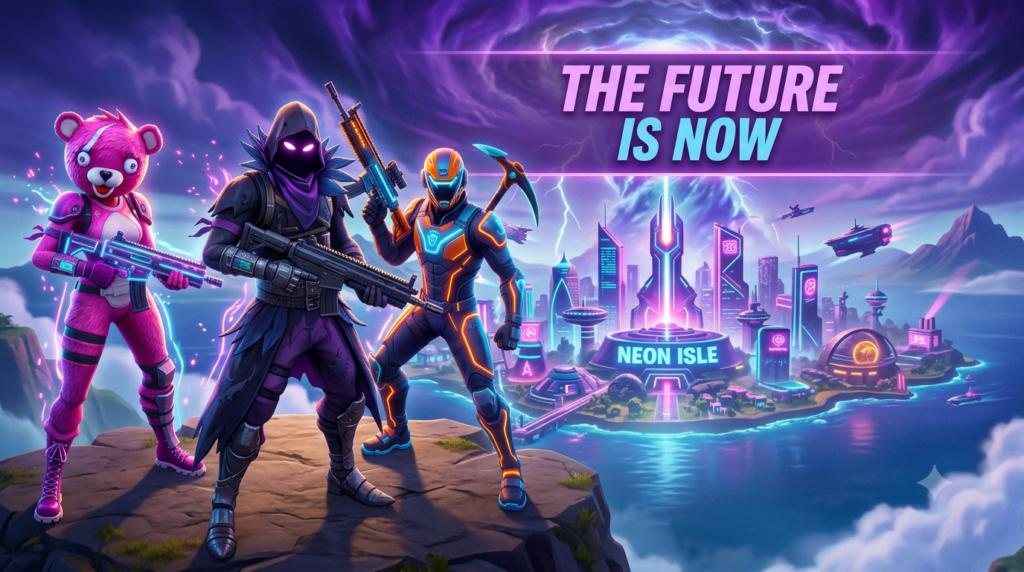
When Epic Games launched the Battle Royale mode for Fortnite in 2017, few could have predicted that a quirky game about building and scavenging would transform into one of the biggest pop-culture phenomena in history. Today, Fortnite is no longer just a video game; it is a massive, living metaverse that connects millions of players worldwide.
The Unique Mechanics: Building a Legacy
What sets Fortnite apart from its competitors (like PUBG or Apex Legends) is its core mechanics: Building. The ability to harvest materials and instantly construct walls, ramps, and towers mid-combat completely changed the tactical landscape of shooters.
Additionally, its bright, cartoonish art style made it accessible and appealing to younger audiences without the gritty, realistic violence found in traditional shooters, allowing it to capture a massive, cross-generational player base.
The Ultimate Sandbox: Colliding Universes
Where else can you see Goku using a sniper rifle to eliminate Batman, while Travis Scott performs a concert in the sky? Epic Games mastered the art of collaborations, turning the game into a digital billboard for major franchises:
- Marvel & DC: Icon skins like Iron Man, Spider-Man, and the Joker.
- Anime: Major crossovers with Naruto, Dragon Ball, and Attack on Titan.
- Real-world Celebrities: Virtual concerts and skins for artists, athletes, and top streamers.
A Constantly Evolving World (Live Events)
Fortnite stays relevant by constantly reinventing itself. Each season introduces massive live events that physically alter the map. Players have witnessed the entire island get sucked into a black hole, flooded by a massive tidal wave, or invaded by aliens. This element of mystery ensures that the community is always anticipating what comes next.

Ilove it guys